
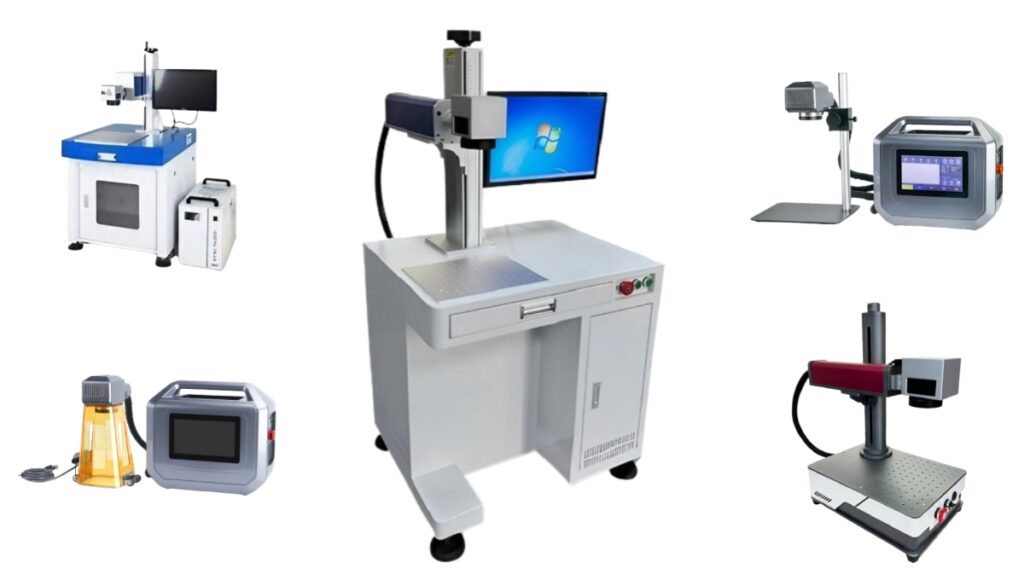
In today’s competitive electronics market, establishing a strong brand and ensuring product traceability are critical for success. As manufacturers look for ways to distinguish their products and comply with increasingly stringent regulations, laser marking has emerged as a powerful tool. Laser technology allows for high-precision marking on electronic devices without damaging the surface, making it ideal for both branding and traceability purposes. In this article, we will explore how laser marking works, its benefits for branding and traceability, and how it compares to traditional marking methods.
1. Why Branding and Traceability Matter in Electronics Manufacturing
In the electronics industry, establishing a recognizable brand and ensuring product traceability are more important than ever. The rise of counterfeit products and complex supply chains has put pressure on manufacturers to maintain control over their products throughout the entire lifecycle. Laser marking offers a reliable solution for achieving both branding and traceability on electronic devices, providing manufacturers with a competitive edge in the market.
Branding is essential for creating a distinct identity for electronic devices, making products easily recognizable and building customer trust. Similarly, traceability allows manufacturers to track products from production to sale, ensuring authenticity and compliance with regulations. This is particularly critical in industries like consumer electronics, where device recalls or issues with counterfeit products can lead to significant reputational damage.
2. How Laser Marking Works for Electronic Devices
At the heart of this innovation is fiber laser marking technology, a precise method that uses a highly concentrated laser beam to mark the surface of electronic components. Unlike traditional methods, laser marking is non-contact, meaning there is no risk of damaging the delicate surfaces of devices such as smartphones, laptops, or other consumer electronics. The technology works by directing a laser onto the surface, where it alters the material at a microscopic level to create clear, durable marks.
Laser marking machines are particularly well-suited for use in electronic components due to their high precision. Whether manufacturers are marking logos, serial numbers, or barcodes, fiber lasers can achieve fine detail without sacrificing speed or quality. As a result, laser marking is becoming the go-to technology for manufacturers looking to improve both the visual and functional aspects of their products.
3. The Benefits of Laser Marking for Branding in Electronics
One of the key benefits of laser marking is its ability to enhance branding efforts. Logos, product names, and other branding elements can be precisely marked on the surfaces of electronic devices using laser technology, ensuring that the brand is both visible and permanent. Unlike labels or ink, laser markings do not fade or wear off over time, even with extensive handling.
Another advantage of laser marking for electronics branding is its aesthetic quality. The precision of laser marking allows manufacturers to create intricate designs, which can help their products stand out in the market. Whether it’s a sleek logo on a smartphone or detailed branding on a laptop case, laser marking enables a high level of customization without compromising durability.
4. Enhancing Product Traceability Through Laser Marking
Product traceability is crucial for maintaining control over electronic devices throughout the supply chain, and laser marking plays a pivotal role in this process. Manufacturers can use laser technology to apply unique identifiers like serial numbers, batch codes, and QR codes to their products. These markings are permanent, tamper-resistant, and easy to scan, making them ideal for tracking products from production through to sale.
Additionally, laser-marked information can help with counterfeit prevention. By marking devices with unique and indelible information, manufacturers can make it significantly harder for counterfeiters to replicate their products. This is a major advantage in industries where the integrity of the supply chain is critical, such as in the production of smartphones, tablets, and other high-value electronics.
5. Comparing Laser Marking with Traditional Methods
When compared to traditional marking methods such as inkjet printing or labeling, laser marking offers several clear advantages. Traditional methods can result in inconsistent marks, are prone to wear and tear, and often require regular maintenance or replacement of materials like ink or labels. In contrast, laser marking is a contactless process, meaning there is no risk of damaging the product’s surface during the marking process.
Furthermore, laser marking is much more precise than traditional methods, allowing for the creation of finer details and more intricate designs. It is also faster and more cost-effective over the long term, as there are no consumables like ink or labels to replace. The durability of laser markings means that products retain their branded elements and traceability features throughout their entire lifecycle, ensuring compliance with industry standards.
6. Case Studies: Successful Implementation of Laser Marking in Electronics
Many leading electronics brands have successfully implemented laser marking as part of their branding and traceability strategies. For instance, the smartphone manufacturer uses laser marking to engrave its logo and unique identification numbers on every device, ensuring that customers receive genuine products while also enhancing brand recognition.
Another example is in the laptop industry, where manufacturers use laser marking to apply QR codes and serial numbers to track devices during distribution and after-sales service. These laser markings are permanent and can be scanned at any point in the product’s lifecycle, simplifying warranty claims and product recalls if necessary.
7. How to Choose the Right Laser Marking Machine for Electronic Devices
Choosing the right laser marking machine for electronic devices depends on several factors, including the size of the device, the materials used, and the desired level of detail. For most electronic devices, fiber laser marking machines are the best choice due to their high precision, speed, and ability to mark various materials including metals and plastics.
Manufacturers should consider the machine’s power output, speed, and software capabilities to ensure it meets their production requirements. Additionally, investing in a machine with advanced features like automated material handling or vision systems can improve efficiency and accuracy in large-scale production environments.
8. Conclusion: Laser Marking as a Game-Changer for Electronic Device Branding and Traceability
Laser marking plays a crucial role in enhancing electronic device branding and traceability by providing permanent, high-precision marks that resist wear and environmental conditions. With the ability to mark logos, serial numbers, and QR codes, manufacturers ensure both brand visibility and compliance with regulatory requirements.
Additionally, laser marking offers unparalleled flexibility, allowing for easy customization and adaptability across various device materials and shapes, all while maintaining consistent quality. As the demand for branded and traceable products continues to grow, incorporating laser marking technology is essential for manufacturers looking to stay competitive in the electronic device market.