
Considering a laser marking machine but unsure where to start? This article demystifies laser marking technology and leads you through the critical factors to consider when choosing a machine for precision engraving. Learn about the latest machines, their capabilities, and how to align their features with your industrial needs. We provide actionable insights without the clutter of technical jargon.
Key Takeaways
- Laser marking is a non-contact process, employing technologies such as fiber and CO2 lasers, suitable for different materials, with recent advances enhancing precision and reducing beam condensation diameters for intricate details.
- Choosing the right laser marking machine involves considering factors such as the material type, laser power, speed, precision, and its integration into manufacturing processes to ensure efficiency and effectiveness.
- Innovations in laser technology include dynamic beam shaping and dual-head systems for increased throughput, while maintaining operational best practices such as safety protocols, maintenance, and efficiency maximization are crucial for effective laser marking system usage.
Understanding Laser Marking Technology

Laser marking, a non-contact process that uses focused laser beams, serves as a method for engraving high-quality codes, text, and logos on a variety of surfaces. It’s a technology that dates back to the 1960s, following the invention of the CO2 laser, but whose theoretical roots can be traced even further back to Albert Einstein’s work in the early 1900s. Laser marking encompasses a range of laser technologies, including CO2, fiber, and others, each optimized for marking different materials, from metals to plastics.
It’s a high speed, eco-friendly solution that offers consistent quality, durable markings, and low maintenance requirements. So let’s understand how this intriguing process operates.
The Laser Marking Process
The laser marking process uses a focused laser beam to create a permanent mark on the surface of a material. One common method is discoloration, where a low-powered beam moves slowly across the material, producing high-contrast marks without disrupting the material. During marking, the laser heats the material, potentially inducing oxidation under the surface, turning the material black – a feature particularly noticeable in metals.
Another technique is laser annealing, which applies low temperatures to anneal metal surfaces. This is essential for creating clear and durable identification marks such as bar codes, UID codes, and QR codes.
After understanding the process, it’s time to explore the various laser marking types available.
Types of Laser Marking
There are four common types of laser marking.
- Annealing: involves high heat which causes the material to vaporize, creating a cavity that is visible and tactile. Depth variation can be achieved through multiple passes.
- Carbon migration: involves the use of a laser to heat the material, causing carbon particles to migrate to the surface and create a dark mark.
- Foaming: involves the use of a laser to heat the material, causing it to expand and create a raised mark.
- Coloration: involves the use of a laser to change the color of the material, creating a permanent mark.
Each type of laser marking is suitable based on the material and the desired outcome. For example, laser engraving is often used for creating visible and tactile cavities, while laser etching is used for producing raised marks that are shallower than the effects of laser engraving.
These marking techniques can be applied to a diverse set of materials, including marking plastics, as well as metal marking.
- metals
- ceramics
- organics such as wood and leather
And for deep engraving and high-speed processing, fiber laser markers are specifically designed, accommodating needs for deep and precise marks.
Speaking of fiber lasers, it’s worth examining recent technological advancements in this field.
Advancements in Laser Technology
Recent technological improvements in fiber laser markers have led to the creation of models that emit a more focused laser beam. This enhanced focus provides:
- Exceptional quality of the laser beam
- Smaller condensation diameter
- Increased accuracy for intricate details during marking, achieving a condensation diameter of under 20um.
These developments not only enhance the precision but also expand the range of applications across different sectors.
Selecting the Right Laser Marking Machine for Your Needs
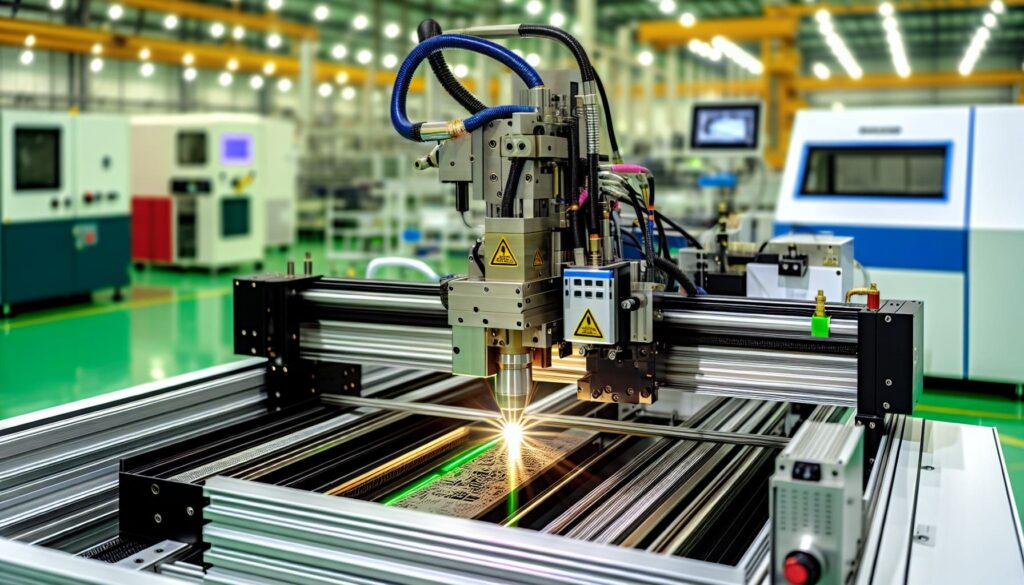
Understanding the basic principles of laser marking technology equips you with the knowledge required to choose a suitable laser machine tailored to your requirements. It is essential to pick a top-tier laser marking machine for streamlined and successful marking tasks.
To assess the material type that will undergo marking, it’s important to take into account other significant considerations such as power, speed, accuracy, and how seamlessly the machine can be incorporated into existing manufacturing workflows.
Material Considerations
In the realm of laser marking, the nature of the material is pivotal. Laser marking machines are versatile enough to handle a wide array of materials that include:
- wood
- acrylic
- glass
- paper
- leather
- ceramics
- various metals
- plastics
These materials used for laser marking fall into two categories: organic (such as wood, paper, plastic) and inorganic (like metals, steel, aluminum), each requiring distinct approaches to marking.
To mark materials such as wood, plastics, and rubber with precision and achieve optimal results, techniques specific to each are utilized. These processes might involve adjusting the laser settings for etching, engraving or cutting based on different material characteristics. It’s essential to use only those materials that are confirmed safe and suitable for your particular machine when engaging in laser work. This precaution helps avoid release of harmful fumes or damage due to corrosion thus protecting both machinery and environment alike.
Power, Speed, and Precision
Power, speed, and precision are key factors to consider when selecting a laser marking machine. Here are some guidelines to help you choose the right machine for your needs:
- Low power lasers, typically in the range of 25 to 80 watts, are used for engraving.
- Higher power, more than 80 watts, is needed for cutting and high-speed applications.
- Higher laser powers allow for faster working times when engraving laminates and greater processing flexibility across different materials.
- For metal engraving, like annealing and laser marking, fiber lasers with 20 to 30 watts are found to be sufficient.
Choosing the right laser technology and power settings is influenced by the need for specific types of marks, such as deep engraving or high contrast marking. Fiber lasers enable finer focusing compared to CO2 lasers, which benefits precise, small-scale marking. Moreover, fiber lasers have higher electrical efficiency than CO2 lasers, leading to lower power consumption during operation.
Integration into Manufacturing Processes
Integration of laser marking systems into manufacturing processes plays a vital role in maximizing efficiency. Some key benefits of integrating laser marking systems include:
- Enhanced accuracy and precision
- Improved efficiency of the marking process
- Integration of artificial intelligence and machine learning algorithms
- Flexibility to handle various materials, shapes, and sizes without disruptions
These advantages make laser marking systems an essential tool for modern manufacturing processes.
Innovations like technology, which utilizes dynamic beam shaping, along with advanced beam steering technology and the robustness of fiber lasers, pave the way for faster and more precise marking capabilities. Furthermore, the integration of dual-head laser marking systems optimizes the production line by increasing throughput, reducing part handling, saving floor space, and ultimately enhancing marking efficiency.
Features of Top Laser Marking Machines
What sets top laser marking machines apart from the rest? Features such as:
- Versatility
- Adaptability
- High accuracy
- Advanced safety measures
Make them stand out. Machines from Pilaser offer a compact 20W fiber laser, suitable for flexible integration into different production settings. The Telesis fiber laser marking system is known for its versatile and adaptable nature, with benefits including minimal maintenance needs and no requirement for consumables.
We shall explore the details of fiber lasers, CO2 lasers, UV laser markers, and the latest innovations in deep engraving and laser engraving, including the use of a laser engraver.
Fiber Lasers vs. CO2 Lasers
In the realm of laser marking, each type of laser—fiber and CO2—excels in different applications. Fiber lasers are highly effective for etching non-organic substances like metals and plastics, as they create marked contrasts within their engravings. Conversely, when it comes to organic materials such as wood, glass, and some types of plastics that require a less contrasting mark, CO2 laser marking is the method of choice.
The versatility offered by CO2 laser markers makes them ideal for inscribing a variety of non-metallic surfaces which tend to be thin or flat in nature. These include materials such as paper and certain kinds of plastic. The flexibility provided by self-adjusting focus optics enables both fiber and CO2 lasers alike to achieve precision marks on contoured 3D objects.
Pricing differs between these systems: whereas fiber laser setups start at around $10,000 due largely to higher costs associated with their sophisticated technology options available on the market today exhibit lower price points starting from approximately $3,COO up to about $6,OOO, thus presenting themselves as an economically feasible solution for many users looking to enter the field.
UV Laser Markers for Sensitive Materials
UV laser markers have a unique advantage when it comes to marking heat-sensitive materials. They perform ‘cold marking’ which prevents thermal damage, making them ideal for industries like electronics. The 355 nm wavelength of UV lasers enables new applications for sensitive materials as it is specifically suitable for marking challenging materials like certain plastics and reflective metals.
Moreover, UV laser markers can produce high-contrast marks with less power, ensuring a damage-free marking process, which is particularly advantageous in the pharmaceutical industry. Companies like Pilaser offer a UV laser marker with 3-axis control for consistent focus, which is crucial for uniform marking on objects with complex shapes or large fields of view. With the use of a laser marker, the precision and quality of the marks are significantly improved.
Innovations in Laser Engraving and Deep Engraving
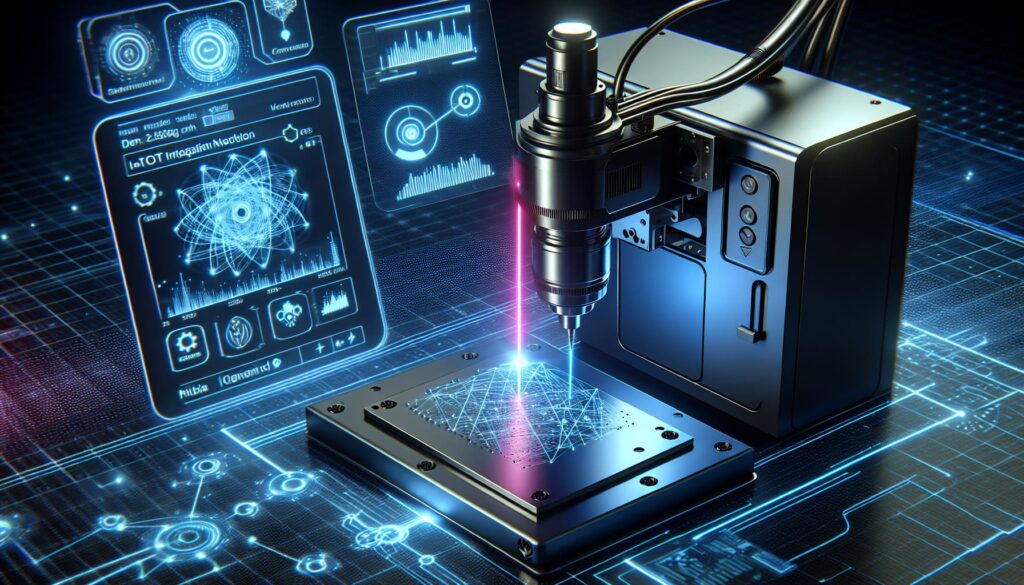
The world of laser engraving and deep engraving has seen a surge of innovations. These technologies now enable:
- Deeper engraving with minimal heat impact on surrounding materials
- Precise 3D modeling
- Automated path generation for complex surfaces
- Improved precision and control over laser intensity, pulse duration, and spot size
- Use of pulsed fiber lasers
- Enhanced capabilities for creating intricate designs and textures in deep engraving.
Integrated vision systems along with adaptive marking depth technology uphold high-quality marking standards and consistency, while advanced cooling systems help prevent material deformation during deep engraving. Real-time monitoring and Internet of Things (IoT) integration have been implemented to allow remote adjustments and promote predictive maintenance, cutting down potential machine downtimes.
Current advancements are placing an emphasis on eco-efficiency by constructing laser machines that function with lower energy requirements, reducing operating costs and environmental impact. Moreover, multi-laser systems are a groundbreaking feature that can mark different parts of a product simultaneously, significantly optimizing processing time.
Applications of Laser Marking in Industry
The versatility of laser marking finds applications in various industries, including:
- Aerospace sector: Laser marking is used to apply traceability marks on parts with limited space or complex geometries.
- Automotive industry: Laser marking is used for traceability and compliance with regulations.
- Cosmetics industry: Laser marking adds high-quality codes and branding, contributing significantly to the product’s identity and appeal in the luxury market.
The significance of laser marking is undeniable in these industries.
We will now examine in detail how it is employed in the automotive, electronics, and cosmetics industries.
Traceability in the Automotive Industry
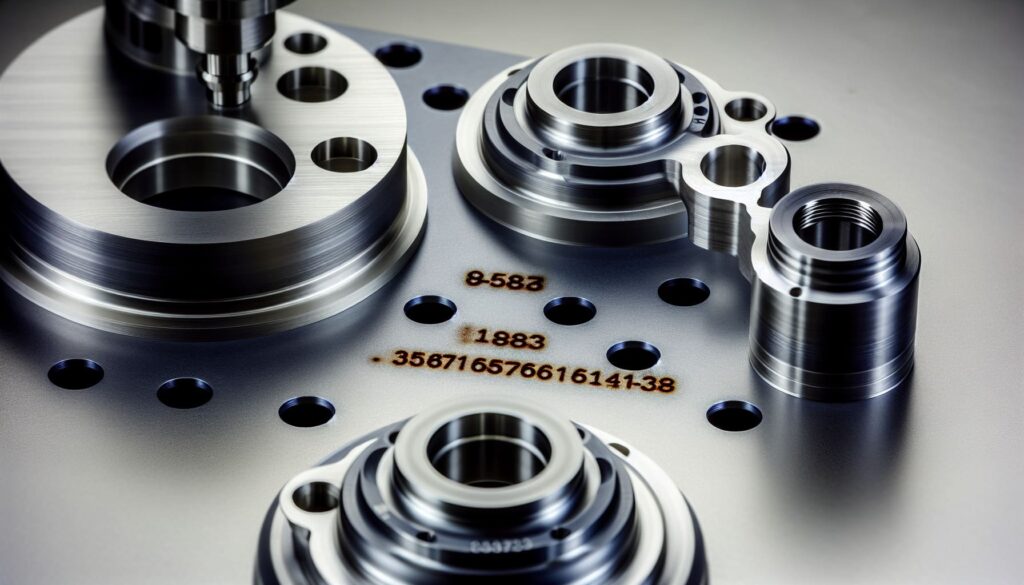
In the automotive sector, laser marking is instrumental for:
- Inscribing serial numbers and various identification tags crucial for tracking purposes
- Catering to high-volume production needs with its automated and rapid processing features
- Ensuring that markings on auto components last despite years of usage and deterioration.
Adherence to traceability standards within the automotive industry is a key function of laser marking. This compliance is pivotal for maintaining quality assurance and managing recalls effectively. Hence, laser technology’s application in car manufacturing is broad-ranging and essential.
Cold Marking for Electronics
In the electronics sector, utilizing UV lasers for cold marking has revolutionized the marking process. By significantly diminishing heat stress exerted on materials, it concurrently decreases potential thermal damage to delicate electronic parts and cuts down on product waste.
Employing UV lasers for the cold marking procedure surpasses conventional methods that rely on heat for marking, resulting in enhanced efficiency of production lines. As a result, this technique has established itself as an indispensable tool within the realm of electronics manufacturing.
Branding and Customization Opportunities
Laser marking machines allow for the creation of QR codes, logos, and other branding elements on a variety of product materials. In the cosmetics industry, for instance, laser marking provides detailed, small-scale branding crucial for engaging customers and protecting against counterfeits.
In the medical device industry, UV laser marking is particularly valued, where clear and precise markings contribute to a stronger brand reputation. Cold marking technology is adaptable for branding a wide range of materials, including delicate plastics and metals, without damaging them.
Thus, laser marking provides immense branding and customization opportunities across various industries, making laser marking solutions highly sought after.
Operational Best Practices for Laser Marking Systems
In order to operate laser marking systems efficiently and effectively, there are best practices that must be adhered to. These encompass:
- Conducting routine maintenance
- Following safety guidelines strictly
- Enhancing operational efficiency
- Maintaining the equipment regularly for optimal performance
We will explore these best practices, beginning with a focus on following strict safety protocols and regulations.
Safety Protocols and Regulations
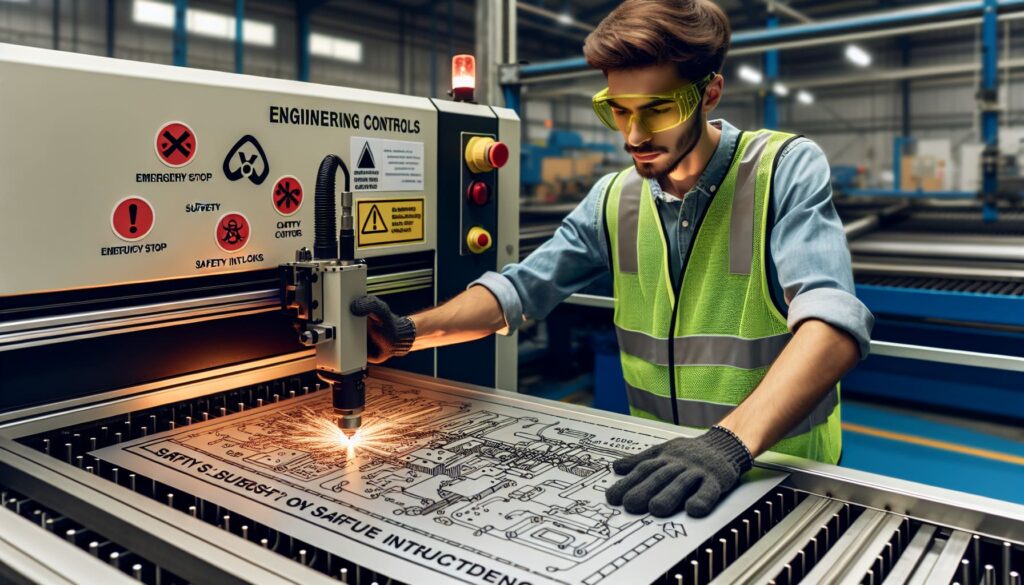
Safety is paramount when it comes to operating laser marking systems. Operators and personnel must:
- Use Personal Protective Equipment such as protective eyewear specific to the laser system’s wavelength
- Use flame-resistant bodywear when working with class IV lasers, ensuring proper storage to maintain their protective qualities
- Implement engineering controls, including protective enclosures, to maintain a safe laser marking environment and control exposure to lasers, particularly on open shop floors.
Administrative safety controls are critical and include thorough operator training to mitigate accidental laser exposure and correct alignment of laser beams to prevent equipment damage. Safe operation of laser marking machines necessitates using only approved materials to avoid generating hazardous or corrosive fumes, coupled with proper ventilation and fume extraction systems for fume management. Posting warning signs in areas where laser markers are used alerts employees and visitors about potential risks and instructs on safety protocols including the avoidance of certain reflective clothing.
Maximizing Efficiency in the Production Process
Maximizing efficiency in the production process is crucial for optimizing the use of laser marking systems. Increasing the power of the fiber laser source improves marking efficiency, but maintaining it below 80% of maximum power extends the laser’s lifespan. For deeper marking requirements, balancing the increased power and current needs with marking speed is critical for efficiency.
The use of a high-speed galvanometer with scanning speeds of up to 10,000 mm/s significantly increases marking speeds beyond those of ordinary galvanometers. Lowering marking density by increasing the hatch line distance within the software quickens the marking process as higher densities enlarge the marking area and slow down the operation. Choosing the marking amplitude wisely is crucial; larger scale marking optics reduce speed owing to the increased deflection area, thus it is advisable to avoid lenses with a larger working field than necessary.
Maintenance for Peak Performance
Regular maintenance is key to maintaining peak performance of laser marking systems. This includes regular inspection of critical components such as:
- the laser source
- the laser head
- software/display units
- water chiller
- fume extractor
The laser head, containing the nozzle and focus lens, should be regularly checked for alignment and cleaned to ensure marking speed and precision.
Lenses should be cleaned with a soft cloth moistened with alcohol, wiping in one direction to avoid scratches. Using an air gun to clear the air duct and circuit board prevents dust accumulation, which can affect the function and longevity of the machine. Lubricating oil should be applied to any moving parts to maintain smooth and quiet operation. Also, purified or distilled water should be used when replacing cooling water in the machine to avoid mineral buildup and overheating.
Fiber lasers, in particular, are acknowledged for their longer service life and lower maintenance requirements in comparison to CO2 lasers.
Summary
As we delve into the realm of laser marking, it’s become clear that this technology revolutionizes sectors with its exceptional precision, adaptability, and rapidity. Our exploration has covered the myriad forms of laser marking and analyzed the advantages and disadvantages between fiber lasers and CO2 lasers, along with the distinctive features of UV laser markers. We’ve examined how different industries employ laser marking, what operational best practices they adhere to, and which safety measures are imperative to implement. Looking ahead, we anticipate Innovations and uses for this groundbreaking technique as we continue forward.
Frequently Asked Questions
How much does laser marking cost?
The price of laser marking can fluctuate based on material complexity, with simple laser etching for small objects starting at $100.00. In contrast, the cost for engraving signs using a laser starts from $800.00 and may increase.
What is the difference between laser engraving machine and laser marking machine?
A laser marking machine is designed to superficially mark an object’s surface with minimal penetration, whereas a laser engraving machine has the capability to inscribe marks more profoundly, reaching into an object’s interior. Both utilize a laser for their respective forms of marking and engraving, but differ in the depth of processing that each can achieve.
Is it worth buying a laser engraving machine?
Yes, it is worth buying a laser engraving machine because it offers many advantages, such as being a universal tool for all materials and saving time by not needing to clamp the material during processing.
What is laser marking?
Laser engraving employs focused beams of light to indelibly mark or engrave codes, text, and logos onto surfaces through a non-contact method that harnesses the precision of laser technology for marking purposes.
How does the laser marking process work?
Utilizing a concentrated light beam, the laser marking method permanently etches materials by techniques like discoloration and annealing to produce marks of high contrast without compromising the integrity of the material’s surface.